Showing posts with label housing stock. Show all posts

Wednesday, 2 August 2017

Lack of supply keeping house prices high – Nationwide

By Marc Shoffman

House prices grew on a monthly basis for the first time in two months as average prices reached £211,671 in July, Nationwide says.

The latest Nationwide House Price Index shows prices were up 0.3% on a monthly basis, reversing falls of 0.2% in May and 0.1% in June.

The figures were also up 2.9% annually, which is a slight dip on the 3.1% growth recorded in June.

Robert Gardner, chief economist for Nationwide, said: “Ultimately, housing market developments will depend on wider economic performance.

“The UK economy slowed noticeably in the first half of the year and there has been little to suggest a significant departure from recent trends in the quarters ahead.

“While employment growth has remained relatively robust, household budgets are coming under pressure as wage growth is failing to keep up with the rising cost of living.

“This suggests that housing market activity is likely to remain subdued, with the balance in the market shifting a little further towards buyers in the quarters ahead.

“Nevertheless, constrained supply is likely to continue to provide support for house prices and, as a result, we continue to expect prices to rise by around 2% over 2017 as a whole – only modestly lower than the levels recorded in recent months.”

Lucy Pendleton, director of estate agents James Pendleton, said: “Market conditions just beneath the surface are keeping this ball in the air despite much talk recently of the market starting to roll over.

“The big question is where is support for house price growth coming from?

“Supply and demand is always a supportive factor but this kind of market behaviour shows just how imbalanced it has become. Prices seem to be finding any excuse to hold their ground and exploiting it.

“The cause has to be lack of supply, placing a squeeze on the number of homes coming to market, helped in June by mortgage approvals slumping to a nine-month low with transactions levels also depressed.”

Jeremy Leaf, north London estate agent and a former RICS residential chairman, agreed that supply was an issue.

He said: “Although these figures on the face of it look quite encouraging when one considers the fall in transactions, it is clear that prices are being supported by a lack of property on the market.

“We would have expected transactions in particular to be higher compared with last year bearing in mind how much quieter the market was 12 months ago following the introduction of the stamp duty surcharge.

“On the plus side, activity could be much lower considering current political uncertainty and fortunately there does seem an enthusiasm among serious buyers and sellers to get on with the job in hand.

“The current climate is also providing an opportunity for first-time buyers at least to better compete for smaller properties.”

http://www.propertyindustryeye.com/monthly-house-prices-returned-to-growth-in-july-nationwide/

Friday, 7 July 2017

Rents outside London remain steady despite jump in available supply

By Marc Da Silva


Asking rents outside London continue to hold up despite an increase in the number of rental homes on the market, according to Rightmove.

New figures from the property portal reveal that prices increased by 2.8% compared to last quarter, similar to the 2.7% average over the past five years.

There was a 7% rise in the number of homes marketed as available by letting agents listing properties to let on Rightmove compared with the second quarter of last year outside London, though new rental properties coming on the market are down 2%.

It is a similar story for housing stock in London, with available properties up 8%, and new listings down 5%, not surprising, according to Rightmove, when comparing to the boost from last minute buy-to-let purchases in Q2 of last year.

Rental prices in London are still running lower than last year and are now 3.2% lower than their peak of £2,020 per month this time last year.

Sam Mitchell, head of letting at Rightmove, said: “Many thought that rental supply would constrict this year, as landlords sold up and looked to invest their money elsewhere, but clearly this isn’t happening yet.

“Perhaps landlords are remortgaging their buy-to-let properties instead, as they still feel it’s a better investment than looking to other industries.  It could spell good news for tenants coming to the end of their lease as they might find there is slightly more choice than last year.


“Anyone hoping for a drop in prices due to the extra choice will be disappointed though as rents are following a very similar trend to previous years."

Rightmove has found the top locations in each region that currently offer the best choice for renters.

The top spot in the South East is Ascot in Berkshire, where the average asking rent for a two-bedroom unit is £1,417 per month. In the North West it is Salford where a two bedroom property would set you back £842 per month.

The cheapest region is the North East, with Newcastle the location with the best choice for rental properties, at an average of £642 per month.

The findings are based on the areas with the highest number of available rental properties, as a proportion of total housing stock in the areas.

https://www.landlordtoday.co.uk/breaking-news/2017/7/rents-outside-london-remain-steady-despite-jump-in-available-supply

Wednesday, 5 July 2017

Rents across much of UK dip for second successive month

By Graham Norwood


Rents fell in June by 0.3 per cent when compared to the same time last year, the second successive month in which rents showed a decline.

June’s decline, according to HomeLet, mirrors the 0.3 per cent fall seen in May, which had been the first annual fall in rents recorded since December 2009.

The average rent agreed on a new tenancy during June was £908, down slightly from £910 in the same month of 2016.

The London rental market continues to act as the biggest influence on average rents across the country, with a 2.6 per cent decline in the average rent agreed on a new tenancy in the city last month.

Rents in the capital have fallen on an annual basis for three months in a row, having risen more quickly than anywhere else in the country during the first half of last year; rental price inflation in London peaked at 7.1 per cent in June 2016.

HomeLet’s data suggests that landlords are reluctant to charge higher rents in the current uncertain economic climate. While demand for private rental property remains high relative to supply, landlords continue to be conscious of affordability issues for tenants.

It says rental price inflation has now been declining for 12 months, since June 2016. At the time, rents were up 4.5 per cent on an annual basis, but since then the rate of growth has dropped gradually each month to reach -0.3 per cent.


Regional data is available via the infographic below.


https://www.lettingagenttoday.co.uk/breaking-news/2017/7/rents-across-much-of-uk-dips-for-second-successive-month

Tuesday, 4 April 2017

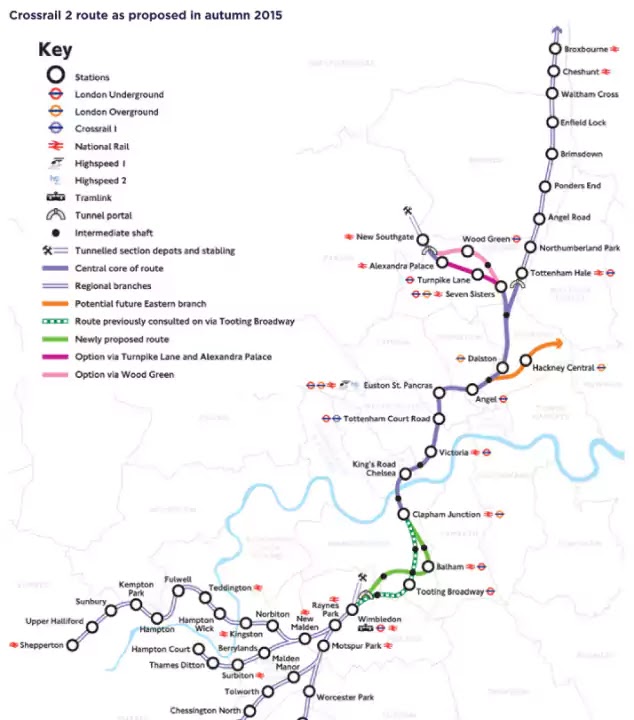
Crossrail 2 is vital to 'fix housing crisis' say property experts

By Isabelle Fraser


Time for Crossrail 2? CREDIT: BLOOMBERG
Giving the green light to Crossrail 2 has been backed by more than 60 property industry leaders, who said it would help ease London's housing crisis by unlocking more than 200,000 homes.

Writing to the Chancellor Philip Hammond, they said: "It will transform transport capacity and connectivity for underdeveloped areas of the capital, such as the Upper Lea Valley, giving the certainty needed to accelerate the development of up to 200,000 new homes."


Signatories of the letter include Melanie Leech, head of the British Property Federation, all of the members of the G15 - London's biggest housing associations - and Tony Pidgley, the chairman of Berkeley Homes, who said that "Crossrail 2 is the only scheme that can make a significant difference to the South East’s housing stock".


The opening up of these areas previously under-served by transport would help not just London, but boost house building across the wider South East, with 30pc of the new homes to be delivered outside the capital.

Ms Leech said that the scheme "will stimulate regeneration up and down its route from the Solent to the Wash, opening sites for new housing and employment. A swift decision from Government on Crossrail 2 would provide a vote of confidence for our industry".

Crossrail 1, which is due to open fully in 2019, opened up the development of Thamesmead in south-east London, with 20,000 new homes there built by Peabody. Stephen Howlett, chief executive of the housing association, said: “Crossrail 2 would have a similarly transformative effect across London."

A new report by JLL for the Westminster Property Association found that the property sector could pay more towards the cost of the project than the Elizabeth Line, due to revenue from the community infrastructure levy and the business rate supplement. London has committed to meeting half the cost of the project.

Last month, more than 70 business leaders including EY, Canary Wharf Group and Heathrow Airport said that Crossrail 2 was "of national importance", adding that it would create more than 100,000 additional jobs in the capital. A decision on the project is expected from Government in the spring.

http://www.telegraph.co.uk/business/2017/04/03/crossrail-2-vital-fix-housing-crisis-say-property-experts/

Monday, 2 May 2016

Supply of rental stock falls

The supply of rental housing stock on letting agents’ books fell in March, to the lowest level since the start of last year, according to the Association of Residential Letting Agents (ARLA) March Private Rental Sector (PRS) report.
 
Demand also dropped in March; ARLA agents had 33 prospective tenants registered per branch on average, down 11% from 37 in February. This stands below the figure recorded in March last year – when agents registered 36 on average.
 
Supply has also fallen year on year. In March 2015, the average number of properties managed per branch was 192, which is down 12% this year with just 169 rental properties managed per branch – the lowest level since records began in January 2015.
 
It’s a brighter picture in Scotland, where agents had on average 273 properties on their books, and Yorkshire and Humberside, where 207 properties were recorded on average per branch. In London however, agents had just 122 properties on their books per branch.

In March, two thirds (65%) of ARLA agents predicted that current and prospective BTL landlords will walk away from the market following the April stamp duty changes, causing a decrease in the supply of rental properties. Rent costs rose in March for a third of tenants (32%), and three in five (61%) ARLA members fear they will increase further as a result of the changes – a growing sentiment since last month, when 57% of agents agreed on this. 
 
ARLA managing director David Cox said: “We don’t expect falling supply to stop here – the recent stamp duty changes are very likely to cause supply to decrease even further, as landlords withdraw from the market.
“Not only do our agents predict that rent costs will increase further, but rental homes may also face a decline in quality over time, as landlords struggle to keep up with maintenance costs alongside the higher stamp duty charge. Whilst landlords adjust to the increase in costs we can expect to see one of three outcomes prevailing in the buy to let market: landlords absorbing the cost and taking the hit; landlords withdrawing from the market causing supply to fall; or landlords regaining those costs through hiking rents. Next month we can start to assess the damage.”