
If you have been following lettings news, you could be forgiven for thinking landlords are simply taking advantage of tighter supply to push asking rents higher. But for investors, the more interesting question is whether this is a durable pricing shift or a defensive move that could create vacancy, affordability and refinance risk.
Property Industry Eye reported that some Chestertons landlords are lifting asking rents after the ban on encouraging bidding wars, with the logic being straightforward: pitch slightly above target and let tenants negotiate down. The same report said lower supply and stronger demand are still supporting the market, while another Property Industry Eye piece noted that in London the gap between advertised and achieved rents widened in July. Rightmove’s rental tracker also showed asking rents rising 2.9% year-on-year in the second quarter of 2026, the strongest annual growth in two years.
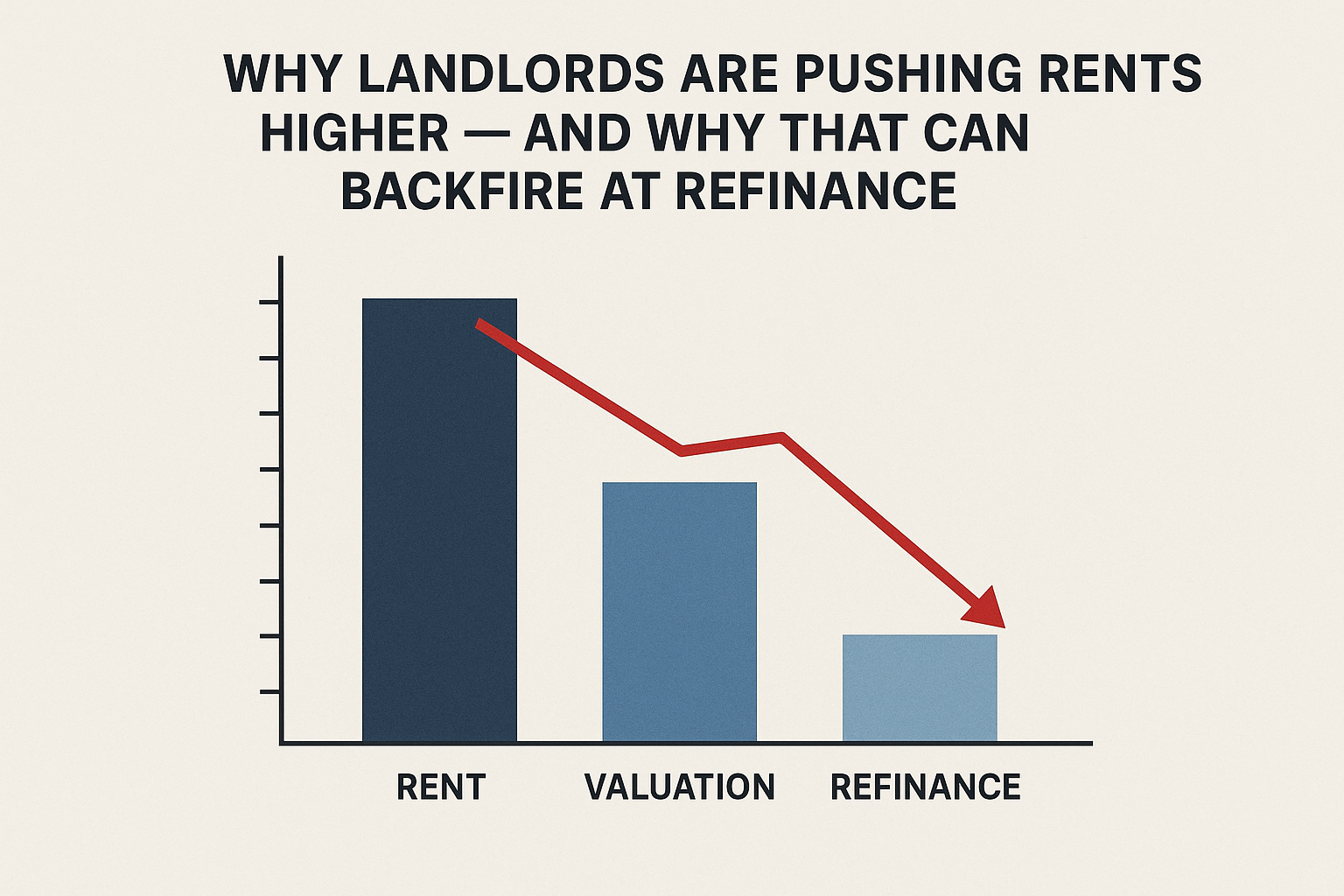
The real risk is friction pricing
That sounds positive on the surface, but it can turn into what you might call friction pricing: more listings look strong on paper than they are in reality. Once asking rents are built with “room to negotiate” baked in, the gap between headline and achieved rent can widen quietly. That is where voids creep in, lets slow down and net yield starts to soften even though the gross figure looks healthy.
For landlords, this is not just a marketing issue. A property that sits empty for an extra couple of weeks can wipe out much of the benefit of chasing a higher headline rent. For investors refinancing, it matters even more. Lenders and valuers are interested in the rent the asset can actually sustain, not the rent that sounded ambitious on the day the listing went live.
That is why optimistic pricing can become self-defeating. If the market starts to treat asking rent as a negotiation anchor rather than a realistic target, the number on the advert becomes less useful as a basis for underwriting.
Regulation is changing behaviour as well as rules
The broader backdrop is the Renters’ Rights Act. GOV.UK says Phase 1 of the reforms began on 1 May 2026, with further changes due from late 2026. The Act removes section 21, strengthens tenant protection and changes how rent increases and possession risk work.
That matters because landlord behaviour often shifts before the data does. Some owners respond to uncertainty by trying to lock in higher entry rents. Others decide the regulatory burden is too much and sell. Both reactions can be true at the same time. For investors, the key point is not whether rents are simply rising. It is whether the rise reflects genuine tenant demand and supply pressure, or whether it is a defensive move that tenants can only absorb for so long.
Affordability still sets the ceiling. Mortgage costs, household budgets and employment confidence all affect what tenants can pay. The Bank of England’s July 2026 Monetary Policy Report said Bank Rate remained at 3.75% at the 29 July 2026 meeting, but borrowing costs can still feel tighter than the headline rate suggests once lender pricing and swap movements are taken into account.
What this means for valuation and refinance
This is where the story becomes commercial rather than just editorial. If a local market is showing higher asking rents but slower enquiries, a valuer may not fully credit the uplift you are hoping for in a refinance model. The result can be a weaker income profile than the one built into your spreadsheet.
That can affect more than one part of the deal. Lower achievable rent can reduce debt service headroom, limit borrowing capacity and leave more equity trapped in the asset than planned. In other words, a rent number that looks impressive in a brochure may not translate into refinance strength if the achievable rent is softer.
The same logic applies to small developments, conversions and mixed-use schemes. If the exit depends on investment demand, your numbers need to survive a market where landlords are pricing ambitiously but tenants are still price-sensitive. The safest assumption is usually not the highest asking rent. It is the rent that can be achieved consistently after voids, turnover, incentives and compliance costs.
The investor takeaway
The best response is not to chase the highest number on the letting board. It is to underwrite on achieved rent, stress-test for a longer letting period and ask whether the asset still works if the market becomes less forgiving.
That does not mean rents cannot rise. It means the most resilient properties are the ones that can still let quickly at a sensible figure, with enough margin for finance costs, management and an eventual exit. If the market is becoming more selective, well-presented stock with realistic pricing may outperform over time. If your deal only works on optimistic rent assumptions, the new regime is more likely to expose that weakness than hide it.
For landlords and investors, the key question is no longer, “How high can I push the rent?” It is, “What rent will still look credible to a tenant, a valuer and a lender three months from now?” That is a much better test of whether the income is real.
