Friday, 6 October 2017

Good grades:trade up to family homes in Zone 2 near top schools in Hampstead, Hackney and Lambeth

From Hampstead to Hackney, families seeking homes near top-performing schools have a wide choice over £750k. 

Parents across England pay an average premium of 45 per cent to live within striking distance of a top-performing state school, according to a recent study by Lloyds Bank.
In London, the craving for high-standard education combined with formidable house prices can amount to a premium running to hundreds of thousands of pounds. Yet for parents with a budget of between £750,000 and about £1 million — not astronomical sums in the grand scheme of London property — the choices are, if not endless, then at least positive.
An analysis of the average price of a typical three-bedroom terrace house close to schools scoring the best A-level grades within their borough has unearthed options from leafy London villages to affluent riverside enclaves and hip central London locations, all within this price bracket.
HAMPSTEAD
In north London, the name Henrietta Barnett is whispered with almost religious reverence by the parents of bright girls.
The Henrietta Barnett School in Hampstead Garden Suburbachieves some of the best exam results of any school, state or private, in Britain. Entry is selective and fiercely competitive.
The suburb itself was built north of Hampstead Heath at the start of the last century, and is an early example of a model suburb with cottage-style houses built in leafy streets and squares.
Although originally intended for average working families, one of these three-bedroom cottages would today cost between £950,000 and £1 million, according to Cobi Aboody, associate director of Goldschmidt and Howland estate agents, while a four-bedroom house would cost about £1.2 million.
Incomers to the area tend to be young families trading up from flats in more expensive neighbouring districts, including Hampsteaditself. Aboody says the school is a particular draw, as well as the very pretty streets and proximity to Hampstead Heath.
The suburb is well equipped with chichi boutiques, cafés and a plentiful range of shops, although in the evening the most excitement you will find is dinner at one of its neighbourhood restaurants.
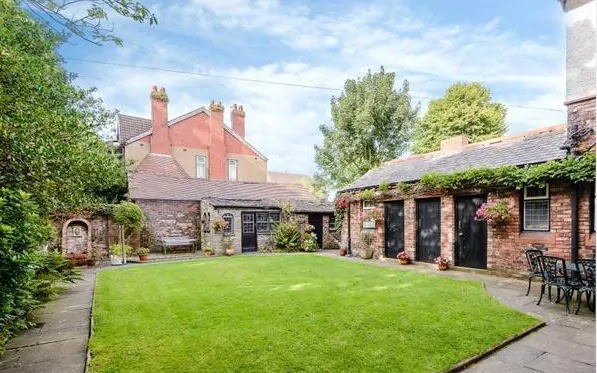
£1,050,000: three-bedroom cottage for sale in Erskine Hill, Hampstead Garden Suburb 
A flaw of the area is its lack of a Tube station. Golders Green, in Zone 3, is the closest option, but requires a bus trip or brisk 15-minute walk. And those who opt to bus it will find that, particularly in the evening rush hour, traffic along the Finchley Road can be horrifying.
Over the last couple of years, says Aboody, homes in the suburb priced at £2 million and above have fallen in value by about 10 per cent — stamp duty hikes having taken the froth off the top end of the market. However, those below £2 million have remained fairly stable.
LAMBETH, VAUXHALL AND KENNINGTON
Buyers looking for a more urban lifestyle could look at the hinterland of the King’s College London Mathematics School in Lambeth, an extremely high-achieving specialist school close to the Imperial War Museum.
Property within the triangle between Lambeth, Vauxhall and Kennington is “fantastically varied” according to Johnny Male, sales director at Daniel Cobb estate agents, with streets of Georgian townhouses, cottages built by the Duchy of Cornwall at the turn of the last century, blingy new flats on the Albert Embankment and some really dire post-war social housing, too.
Prices are steep. Male estimates that one of those cottages, with two or three bedrooms, would cost between £850,000 and £1.1 million depending on size and condition, while a lovely Georgian townhouse with four bedrooms would be £1.7 million-plus. However, he points out, these values are low compared to other similarly central locations.
Nonetheless, buyers are typically an affluent bunch. Male has sold homes to doctors working at nearby hospitals. City types like its great train links — it’s on the borders of Zones 1 and 2 — while “hedge fund folk” can easily get to their West End offices. And of course, overseas buyers dominate sales of the top-end new flats.
£875,000: a three-bedoom terrace house in Birchwood Road, SW17, near highly rated Graveney School in Tooting.
In terms of location this is an area hard to beat. Westminster and Victoria are just over the river, the Southbank is a stroll down the Thames, and rapidly regenerating Elephant & Castle is up the road.
Prices aside, the only flaw Male can see is the area’s lack of retail opportunity. “We have some very nice bars and cafés, the new Damien Hirst gallery on Newport Street, but there is not much in the way of shops,” he says.
HACKNEY DOWNS
On the fringes of Hackney Downs there are two outperforming secondary schools within a quarter of a mile of each other: Mossbourne Community Academy, which is in E5, and The Petchey Academy, over the postcode border and into E8.
This neighbourhood is one of late-Victorian houses and Saylan Lucas, branch manager of Winkworth estate agents, estimates that a three-bedroom property would cost about £800,000 to £900,000. Those that have been extended into the side return to enlarge the kitchen, and with an extra bedroom in the loft, sell at about £1.1 million.
£1.2 million: three-bedroom house in Thornby Road, near Mossbourne Community Academy, in Hackney E5 
Buyers here tend to be thirty-somethings who have built up some equity on flats in slightly more expensive neighbouring locations such as Islington, Highbury or Stoke Newington, and most either have young children or hope to start a family.
Schools aside, this Zone 2 area has plenty of benefits: fast train links to the West End and City, the green expanses of Hackney Downs and plenty of bars and restaurants, both locally and in neighbouring Dalston and Clapton.
The other positive factor, says Lucas, is that Hackney Downs has character. “What people like is that it has had some of the benefits of gentrification, but it has not lost its soul,” he adds. “Islington and Highbury have gone a little bit vanilla, but Hackney remains pretty grounded.”


Thursday, 5 October 2017

Agency boss on fraud and money laundering charges is re-bailed until 2018

The director of a Plymouth letting agency has been re-bailed and will appear in court again in January. 
Heather Crabb, owner of Drake Homes in Plymouth, was arrested almost a year ago charged with fraud, theft and money-laundering offences.
In February this year we reported that the allegations involved around 100 properties managed by the firm; it is believed that many of these are properties let to students.
In late 2016 Crabb issued a statement after her arrest saying: “Due to continued ill health, we are informing you that the portfolio of Drake Homes is being transferred to a reputable agent who will look after your interests. We are in the process of completing your final accounts accordingly and the new agent, who is well established and very experienced will be in touch in due course. Kind regards. Heather.”
Now it has been revealed that Crabb has been re-bailed until January 30, 2018.

Why Theresa May’s pledges won’t fix the UK’s housing disaster

Theresa May visits a Barratt homes development. ‘There may now be some investment in housebuilding but why has it taken so long for Conservatives to grasp this nettle?’ Photograph: WPA Pool/Getty Images
If you want to see cognitive dissonance in action, watch the Conservative party try to develop popular housing policies without contravening its loyalty to developers, landlords or free market fundamentalism. For years, experts from across the housing sector have called for investment in social housing and proper regulation of the private rented sector, so it was entirely predictable that Theresa May’s flagship policy at this year’s conference was a £10bn boost for the housing bubble in the form of the Help to Buy scheme. There may now be some move towards investment in housebuilding – albeit in partnership with large corporations – but the problem remains that the Conservatives are unwilling to confront the origins of the UK’s “great housing disaster”.
This apparent inability to understand root causes is a tendency that has afflicted successive governments. In 1989, as Margaret Thatcher’s government finalised the deregulation of the private rented sector, it was put to the then housing minister, Sir George Young, that some tenants might struggle with rents that would inevitably rise once rent controls were lifted. “If people cannot afford to pay that market rent,” Young assured, “housing benefit will take the strain.”
Fast forward to 2010 and the coalition government’s decision to cap housing benefit because its expenditure in the private rented sector was “out of control”. No one in David Cameron’s government mentioned deregulation, but to anyone who knew the history, the connection was clear: private sector tenants were now to be punished for the consequences of Thatcher’s reforms.
Jeremy Corbyn’s recent announcement that Labour would reintroduce some form of rent control has prompted landlords to warn that such a move would be a “disaster” for tenants. Landlords often claim to be acting in the best interests of tenants, yet cases in which tenants themselves laud the merits of uncontrolled rents are rather more difficult to find.
A year ago, I wrote about the experiences of Gunita, an evicted tenant who lost the right to be housed by her local council. Today, her situation is typical of the millions of low-income private renters who find themselves squeezed between insecure work, a punitive welfare system and rents that are completely out of sync with their earnings. After narrowly avoiding street homelessness, Gunita managed to find a “studio flat” at the local housing allowance rate of £1,040 per month. This so-called studio was essentially a room in a shared house that had been subdivided into four flats. The lock on Gunita’s door was completely inadequate and the electricity meter had been illegally rewired, yet the landlord was earning over £4,000 a month from the combined rents.
Gunita has been in and out of work over the last year, largely due to the insecure nature of her job with a cleaning contractor. Even though housing benefit covers most of her rent, she covers a shortfall out of her wages. This usually leaves her with around £30 a week for food, travel and other bills.
For someone like Gunita, lower rents would dramatically improve her quality of life by freeing up disposable income for something other than survival. The campaign group Generation Rent argues that a living rent should be no higher than 30% of the average income, and propose that controls could be set according to council tax bands. By capping rents at 50% per month of the home’s annual band, they would be brought more in line with people’s earnings. In a London borough like Croydon, for example, a bedsit with a band of £780 per year would mean a monthly rent capped at £390. Landlords would still have the option to charge higher rents, but those who chose to do so would be subject to a 50% surcharge. This money could go into a ringfenced housing fund.
The argument commonly made against rent controls is that they stifle investment and reduce supply. In this country, opponents often point out that prior to deregulation, the UK had a relatively small private rented sector. This much is certainly true: in the London of 1981, the sector accounted for just 16.6% of homes. But this was largely because most people could either afford to buy or had access to council housing, so there simply wasn’t a great demand for private rented properties. That demand had to be artificially created – largely to the benefit of wealthy investors, certainly not in favour of the state or the tenants.
Since deregulation, there is little evidence that the lifting of rent controls has improved either supply or standards. In a city like London, the combined effects of speculation and the decimation of social housing have produced an oversupply of properties at the high end and a chronic shortage at the low end, generating the perfect conditions for the grotesque exploitation of renters like Gunita.
It is clear that the UK needs major investment in social housing, but regardless of what May announces today it will take time to build the number of homes needed to have a knock-on effect on prices. In the meantime, there are various models of rent control that have been proven to create more secure, affordable and sustainable rented sectors in other countries. Adopting a model such as that proposed by Generation Rent above would improve the lives of millions of renters in the here and now.
The truth is that the UK’s housing crisis is not merely a problem of supply and demand, but of class inequality being reproduced through property relations. Perhaps it is the prospect of the present system being curtailed that some find so terrifying.

Wednesday, 4 October 2017

Don't overpay:Why you should switch your mortgage to a new lender before it moves to standard variable rate

Not shifting your lender is the equivalent of turning down a big pay rise.

Walk on by? Ignoring the countless mortgage deals on offer can cost dearly (Getty)
More than a fifth of mortgage payers won't shift to a new lender, no matter how good a new deal they are offered, according to research from YouGov and Habito. Mortgage experts say staying put is the equivalent of turning down a pay rise.
According to the new data, more than a third of borrowers haven't changed their mortgage in the past five years, despite an abundance of deals on offer. This means that homeowners could be unnecessarily overpaying by thousands of pounds a year.
Most at risk of overpaying are homeowners whose deals have ended and have moved to their provider's standard variable rate (SVR).
"Now is the time to consider remortgaging," says Jeremy Duncombe, director at Legal and General Mortgage Club. Borrowers on an SVR could save "the equivalent of a monthly pay rise or a family holiday at half-term," he adds.
Mortgage rates plummeted again this year. With only 10 per cent equity in your property, HSBC, First Direct and Yorkshire Building Society all offer mortgages with a two-year fixed interest rate below two per cent. If you are lucky enough to own up to 40 per cent of your property, you can get a fixed interest rate below one per cent with Yorkshire Building Society (plus fees of £1.825).
If you prefer to have a mortgage that tracks the rate set by the Bank of England, HSBC offers the lowest rates. The best, reserved for homeowners with an LTV below 60 per cent, is just 0.74 per cent above the base rate. This means it is just 0.99 per cent.
But even if you only have a 10 per cent deposit, the rate only rises to 1.59 per cent above the base rate, at 1.84 per cent. In all cases a £999 booking fee applies.
These rates are all a far cry from the lenders' SVRs. For First Direct and HSBC the rate jumps to 3.69 per cent at the end of the two-year deal, while for Yorkshire Building Society it is an eye watering 4.74 per cent. Even more exorbitant are Leeds Building Society, Accord Mortgages and Furness Building Society who all have SVRs above five per cent.
Could you give yourself the equivalent of a hefty pay rise by re-mortgaging?
Comparison websites are a great place to start. They take seconds and give you at least an idea of how much a new deal could save you each month. Do remember to include the fees in your comparison.
These vary in name, but are typically upwards of £1,000 to take out a mortgage, plus a £100 or more to have your property valued. Other fees may also apply.
Once energised by the potential savings, you have a choice: speak to the providers directly or use an independent mortgage broker. If you want an easy life, opt for the broker. They survey the market, help you pick the right deal and mean you only need to give them your personal information once. Best of all, many won't charge you a penny. Instead, companies such as online broker Habito levy the fee on the lender, with the amount fully disclosed.
You can make the process smoother and quicker by collating your paperwork in advance. Just like when you took out the initial mortgage, you'll likely need proof of your identity, earnings and where you live. This means digging out bank statements, payslips, your P60, utility bills, passport and if self employed, your last three years' accounts/tax returns. If you have gone paperless, expect to get some of these certified by your bank or a professional.
Even for the super efficient getting a mortgage takes time, often four to eight weeks. Fortunately many lenders will honour your mortgage offer for at least three months. So start early. There really is no need to get sucked onto expensive SVRs.
Your mortgage is likely your biggest financial obligation; don't let it be your biggest blind spot.
Instead, channel your willingness to switch phone and utility providers to get the best deal and save yourself a packet.

What £500,000 buys you in the UK's top northern cities compared to London

Manchester offers affordable property and high rental returns CREDIT: ALAN NOVELLI / ALAMY
House prices are rising in all parts of the country except London, and buy-to-let investors are increasingly shunning the traditionally profitable capital city for northern hotspots where property is cheap and returns are high.

According to recent data from Nationwide Building Society, property prices in London fell by 0.6 per cent in the year to September, compared to the national average growth of two per cent.

Separate data from Hometrack, also published last week, pointed to Manchester, Birmingham and Edinburgh specifically as cities where house prices have soared ahead of other UK regions, with growth up 7.3 per cent, 6.7 per cent and 6.6 per cent, respectively.

Surging house prices in these cities coupled with attractive rental yields mean they're quickly becoming a desirable location for buy-to-let investors. Landlords in Manchester, for instance, received an average yield of 6.9 per cent in July of this year, according to figures from HM Land registry.

First-time buyers are also being lured to urban hotspots such as Liverpool and Manchester in the hope of snapping up a home that is a fraction of the price of London property.

London

A typical two-bedroom flat in London costs just over £500,000, according to Savills.

The property below, for example, situated in leafy Clapham, London, offers two bedrooms, a bathroom, a reception/dining room and a balcony, spread over 625 sq ft. The flat is a five-minute walk from Battersea Park, the closest station, and about a 30 minute train drive into the city centre.

This property in Clapham, London, is on the market for £499,950 CREDIT: SAVILLS
It features two double bedrooms, a kitchen and a reception / dining room CREDIT: SAVILLS
So how does this compare to what £500,000 will buy you in Manchester, Birmingham, Liverpool and Nottingham?

Birmingham

In Birmingham's trendy Moseley suburb, named the best place in the UK for city living in 2015, you can buy this luxury three-bedroom apartment for £495,000. It's around a 15-minute walk to University train station, which is only two stops from Birmingham New Street.

Housed in a development of 14 apartments, the three-bedroom flat come with triple glazing, underfloor heating, a kitchen with Miele appliances, a communal lift, landscaped gardens, and two parking spaces. It's spread over 2,400 sq ft – almost four times bigger than the London flat.

A three-bedroom flat in this luxury development in Birmingham's trendy Moseley suburb is on the market for just under £500,000 CREDIT: RIGHTMOVE / ROBERT POWELL
Spread over 2,400 sq ft, the flat is almost four times bigger than the London apartment above CREDIT: RIGHTMOVE / ROBERT POWELL
Manchester

A budget of £500,000 will stretch to a three-bedroom, semi-detached home in West Didsbury, Manchester. It is housed in a Grade II listed building located within the prestigious 'Didsbury Gate' development, which is within walking distance of Burton Road and West Didsbury village. It also boasts a private landscaped garden and two parking spaces.

This three-bedroom home is housed in a Grade II listed building CREDIT: RIGHTMOVE / PHILIP JAMES KENNEDY
Liverpool

In Merseyside, Liverpool, this £500,000 house offers six bedrooms, five of which are doubles. It also has enclosed gardens surrounding the property with a large driveway leading to a detached double garage. The property is based just half a mile from Eccleston Park train station.

This six-bedroom house in Liverpool is on the market for £500,000 CREDIT: EXPRESS ESTATE AGENCY
Gardens surrounding the property, with a large driveway leading to a detached double garage CREDIT: EXPRESS ESTATE AGENCY
Nottingham

This cottage in Nottingham's sought-after Vale of Belvoir, which comes with a south-facing garden and views up to Belvoir Castle, is on the market for £525,000. Covering more than 2,306 sq ft, there are four double bedrooms, a dining room, kitchen, garage, sitting room, pantry and garden room. 

This cottage in Nottingham's sought-after Vale of Belvoir is on the market for £525,000 CREDIT: SAVILLS
For a little over half a million pounds, buyers will acquire more than 2,306 sq ft of property CREDIT: SAVILLS

http://www.telegraph.co.uk/property/house-prices/500000-buys-uks-top-northern-cities-compared-london/

Monday, 2 October 2017

Zoopla reveals changing fortunes for Britain's wealthy homeowners

Property rich list shows sharp fall in value of homes on London’s most expensive streets

A mansion in Kensington Palace Gardens, London, Britain’s most expensive street. Photograph: Alastair Grant/AP
Some of Britain’s wealthiest homeowners have seen as much as £13m wiped off the value of their property in a year as Brexit uncertainty and tax changes continue to wreak havoc in the prime central London market.
According to new research, Kensington Palace Gardens in west London tops the list of the most expensive streets in Britain, with an average property value of £35.7m – although that is £2.5m less than this time last year, when the figure was £38.3m. In July 2015 a typical property in the street was worth £42.6m – which reflects a near-£7m decline in just over two years, said property website Zoopla in its annual Rich List of house prices.
Kensington Palace Gardens is reported to be home to Chelsea football club’s owner, Roman Abramovich, the Formula One heiress Tamara Ecclestone and the Sultan of Brunei, Hassanal Bolkiah.
However, the ultra-wealthy owners of homes in the Boltons, two miles south, have had a much tougher time of it. Zoopla said the average value of a property on the street in South Kensington had plummeted from £33.3m this time last year to just under £20m now. Previous residents of the Boltons include Madonna and actor Douglas Fairbanks Jr. The Boltons came third in the table of the top 10 most expensive streets, all of which are in London.
A house on the Boltons, where average values have plummeted from £33.3m last year to under £20m. Photograph: Rightmove
Other roads in the area, such as Manresa Road in Chelsea, had smaller falls, and a few increased in value over the year.
Other surveys have also reported sharp falls in some of the capital’s most expensive boroughs. Last month the property site Rightmove said the average asking price of a newly marketed home in Kensington and Chelsea fell by £308,000 between August and September. On Tuesday, upmarket estate agent Savills said prices in central London had fallen by 3.2% in the first nine months of this year, and were 15.2% below their peak three years ago.
On Friday, Nationwide said London house prices had fallen for the first time year on year since the height of the financial crisis eight years ago.
Rightmove described the slump in the high-end central London market as a “readjustment”, and quoted an estate agent saying that, since the introduction of the 3% surcharge on stamp duty paid by investors, along with the uncertainty over how Brexit would pan out, “investors have been standing on the sidelines”.
Zoopla said there were now 14,417 streets in Britain where the average property value is £1m or more – up from 12,418 in 2016. Of those, 5,899 are in Greater London. The Yorkshire and the Humber region has 77 £1m streets, north-east England has 45 and Wales has 11.
In line with this trend, 19 of the 20 towns with the highest number of £1m-plus streets are in southern England. Guildford in Surrey takes the top spot with 204, with Reading in Berkshire in second place with 187.
Zoopla says its website attracts more than 40m visits per month. Asked about the large fall recorded for the Boltons, a spokesman said: “The number of estimates on a given road can vary and can be subject to change throughout the year. In the case of the Boltons, it could be that several estimates have been newly added to listings which previously didn’t have a figure attached, and this may have had the knock-on impact on the street’s average value compared to last year.”

At last! Victory for industry campaigners as ministers finally bow to demands for letting agents to be regulated

All letting agents across England will have to be registered under new legislation, Communities Secretary Sajid Javid said yesterday.
He made the announcement yesterday afternoon at the Conservative party conference, making clear: “We will regulate letting agents who want to operate.”
It means that the days of anyone being able to set up as a letting agent – even if they have just come out of jail after stealing deposits or have no experience of the sector – are finally drawing to a close.
It is not clear why ministers have at last cracked after many years of campaigning from within the industry itself that there should be regulation. Successive housing ministers in both Labour and Conservative administrations have either refused or failed to bring in regulation, usually citing not wanting to add red tape to the industry.
However there has been case after case of agents mis-using tenants’ deposits and failing to pay rent over to landlords, disappearing into the sunset with the public’s money while police have too often said it was a civil matter where they would not prosecute.
Until yesterday, ministers have so far been deaf to demands that letting agents should be regulated – those demands being made not in order to protect the industry, but to  protect tenants and landlords.
Tenacious campaigners have included Labour peer Baroness Hayter. Yesterday afternoon, she told EYE she was thrilled, saying: “I am delighted the Government has finally agreed to our long-held view that letting agents – who handle people’s homes – should be both qualified and regulated.
“Landlords and tenants alike will welcome this move. We will push for the earliest possible introduction of this legislation.”
There is no detail as to how exactly far the new intended regulation will go, but it looks as though organisations such as ARLA Propertymark, RICS and NALS will have an all-important role to play.
Last night, NALS boss Isobel Thomson told EYE: “The measures in the minister’s speech are very welcome news giving clear confirmation that the Government is adopting a coherent, strategic approach to the Private Rented Sector for the benefit of consumers.
“NALS and the Fair Fees Forum called earlier this year for both the fee ban and introduction of mandatory Client Money Protection to be framed within wider regulation as the only way to ensure that all agents meet the same requirements and consumers are protected.
“We are delighted that Government has listened. We look forward to engaging with Government to take forward all of the measures they have announced.”
Javid yesterday said: “Currently, anyone can operate as a letting agent without any qualifications or professional oversight.
“We will change the law so that all letting agents must register with an appropriate organisation.
“This will mean that letting agents would be required to satisfy minimum training requirements and comply with an industry code of conduct.”
Private landlords are also to face regulation, with Javid announcing that they must all become members of a redress scheme – either in their own right or through a letting agent –  which will offer dispute resolution.
Javid said: “We will make it mandatory for every landlord to be part of an ombudsman scheme, either directly, or through a letting agent. At the moment landlords, unlike letting agents, are not required to sign up to ombudsman (redress) schemes.
“We will change the law so that this becomes a requirement, giving all tenants access to quick and easy dispute resolution over issues like repairs and maintenance.”
Javid also announced yesterday that new incentives will be unveiled in next month’s Budget to ensure tenancies are at least 12 months.
In addition, there new court of law, specifically dealing with housing issues could be set up, with Javid saying that there will be a consultation with the judiciary.
He said: “We will explore whether a new housing court could improve existing court processes, reduce dependence on legal representation and encourage arbitration, with benefits for both tenants and landlords. We will consult with the judiciary on whether the introduction of a new housing court can meet the aim of saving time and money in dealing with disputes.”
Javid said: “For too long tenants have felt unable to resolve the issues they’ve faced, be it insecure tenure, unfair letting agents’ fees or poor treatment by their landlord with little to no means of redress. We’re going to change that.
“We will insist that all landlords are part of a redress scheme and we will regulate letting agents who want to operate.
“Everyone has a right to feel safe and secure in their own homes and we will make sure they do.”
The private rental sector currently accounts for a fifth of all households, about 4.5m in total.
Wales – which like Scotland, has its own devolved housing powers – has already introduced the Rent Smart Wales regime, making it mandatory for private landlords to be registered and for all letting agents in Wales to be regulated. Agents must undergo training and be ‘fit and proper’ persons. Landlords who carry out any property management must also be regulated; if not, they are required to use a regulated agent.
For English agents offering both sales and lettings, there will be a question mark as to how far each of those operations will be regulated, and their compliance. Sales agents have to abide by the Estate Agents Act (which excludes letting agents) but do not have to register: lettings agents will, however, have to sign on to a central register but it seems might still not have to comply with the Estate Agents Act, which has banning powers.